Dry Storage in Riyadh: How to Choose the Right Provider in 2026
Finding reliable dry storage in Riyadh has become a real headache for growing businesses and busy households alike. As the capital’s commercial districts expand and residential towers multiply, demand for secure, climate-stable storage space has outpaced the supply of trustworthy operators. Picking the wrong facility can mean mildew-damaged documents, pest infestations, or simply paying too much for space you don’t need.
This guide walks through exactly what separates a professional storage operator from a glorified garage-for-rent, so you can make a confident decision whether you’re archiving business records, stocking seasonal inventory, or just clearing out a crowded villa.
Why Riyadh’s Storage Market Looks Different in 2026
Riyadh’s population growth and the Vision 2030 push toward a diversified, logistics-heavy economy have reshaped how storage is bought and sold. Retailers importing goods through Jeddah Islamic Port or King Abdullah Port now need interim warehousing closer to the point of sale. Small businesses selling online need somewhere other than a spare bedroom to keep stock. Even families relocating between neighborhoods increasingly rent short-term units instead of paying movers to store furniture twice.
That shift has pushed serious operators to professionalize: pest control contracts, fire suppression systems, 24-hour CCTV, and proper humidity management are now baseline expectations rather than premium add-ons.
What Should You Look for in a Riyadh Storage Provider?
Before signing any contract, run the facility through a short mental checklist. The questions below separate operators who treat storage as a serious infrastructure business from those who are just renting out spare rooms.
- Climate and pest control: Riyadh’s summer heat and dust can warp wood, degrade electronics, and attract insects if units aren’t sealed and monitored.
- Transparent pricing: Look for a published rate card rather than “call us for a quote,” which often hides seasonal markups.
- Flexible lease terms: Month-to-month options matter if your inventory needs or moving timeline shift.
- Insurance coverage: Ask explicitly whether goods are insured in transit and in storage, and what the claim process looks like.
- Access hours: Some facilities restrict access to business hours only, which is a problem if you need evening or weekend pickups.
- Specialized unit types: Not everything belongs in a standard dry unit — some goods need refrigeration or tighter humidity control.
A provider that can check every box above, and explain its answers clearly without pressuring you into a long-term contract, is usually one worth trusting with your goods.
Dry Storage vs. Other Unit Types: A Quick Comparison
Not every item belongs in the same kind of unit. The table below breaks down the main storage categories available in Riyadh and when each one actually makes sense.
| Storage Type | Typical Temperature | Best For | Common Mistake |
|---|---|---|---|
| Dry / ambient storage | Room temperature, humidity-controlled | Documents, furniture, retail stock, appliances | Storing perishables or electronics without any climate control |
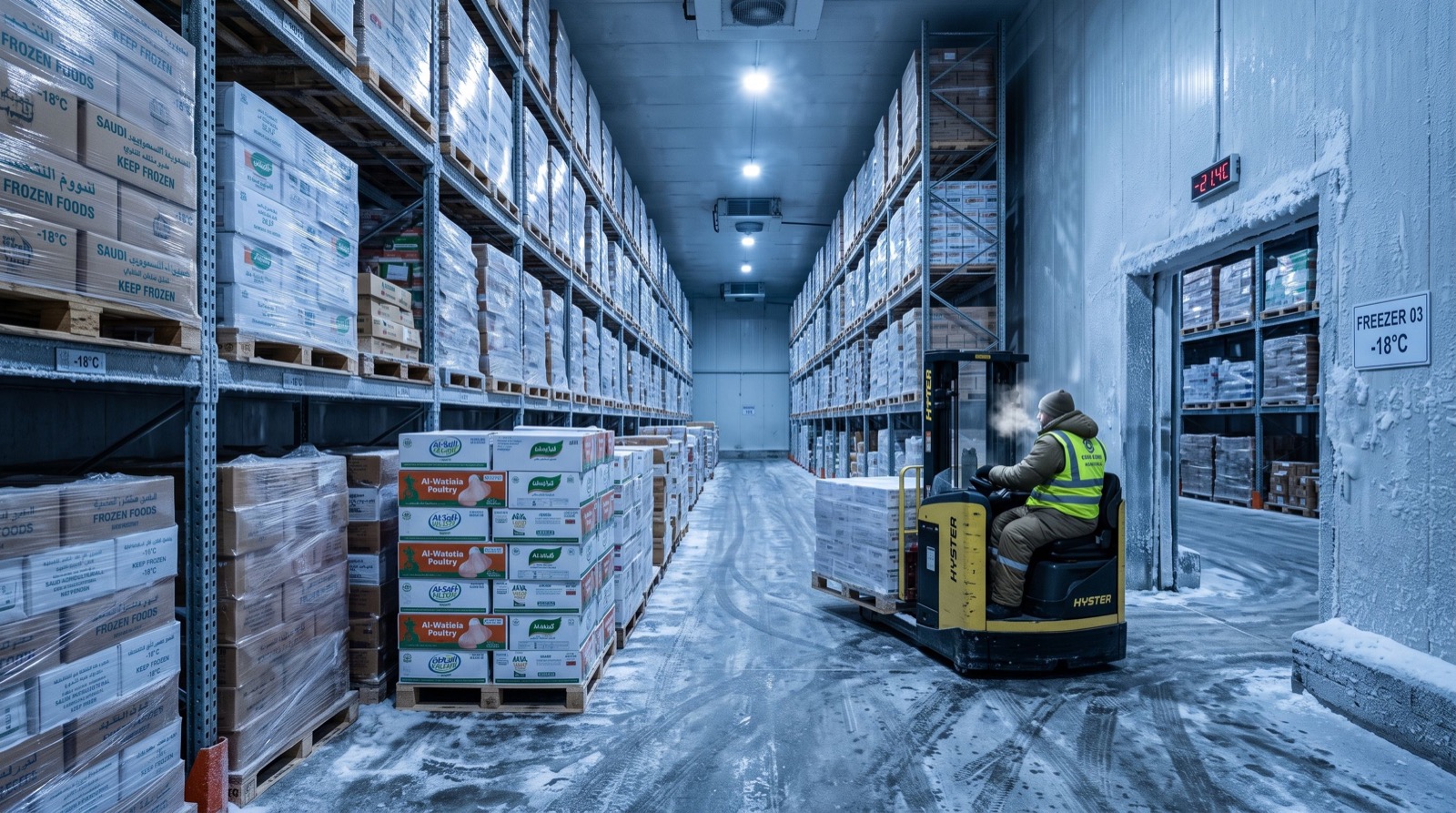
| Frozen / cold storage | -18°C and below | Imported meat, seafood, pharmaceuticals | Assuming any “cool room” is equivalent to true frozen storage |
| Climate-controlled dry | 20–24°C, low humidity | Electronics, artwork, sensitive paperwork | Choosing standard dry storage to save cost, then losing items to humidity |
| Short-term personal storage | Ambient | Household moves, renovation overflow | Signing a 12-month contract for a 6-week need |
For most businesses operating out of Riyadh, a reputable facility offering Dry Storage in Riyadh covers the majority of everyday inventory, documents, and furniture needs — provided the unit is properly sealed, ventilated, and monitored around the clock.
When You Actually Need Frozen Storage Instead
Dry storage solves most problems, but it is the wrong choice entirely for temperature-sensitive goods. Restaurants, grocers, and importers handling meat, dairy, or pharmaceuticals need a facility built around continuous refrigeration, not a converted dry unit with an air conditioner bolted on.
If your business moves perishable stock, it’s worth asking any prospective provider directly about their Frozen Storage capabilities, including backup power for compressors and temperature logging, before committing. A single power outage without backup generation can spoil an entire shipment within hours.
Practical Tips Before You Sign a Contract
A few habits separate renters who get good value from storage and those who end up frustrated six months in.
- Visit the facility in person rather than relying on photos alone — check for water stains, odor, and pest evidence.
- Ask for references from existing commercial tenants if you’re storing inventory at scale.
- Photograph your goods before storage, especially anything fragile or high-value, for insurance purposes.
- Confirm whether loading dock access and pallet jacks are available if you’re moving bulk goods.
- Read the fine print on late payment penalties and lock-out policies.
Businesses that treat vendor selection seriously, rather than defaulting to whichever facility is closest, consistently report fewer disputes and lower loss rates. The same discipline that goes into choosing quality service providers for marketing or logistics applies just as well to storage vendors — reputation, transparency, and a track record matter more than a slick sales pitch.
According to the Saudi Authority for Industrial Cities and Technology Zones (MODON), the Kingdom’s logistics and warehousing footprint has expanded significantly as part of the national diversification strategy, with new industrial zones specifically designed to support storage, light manufacturing, and distribution near major urban centers like Riyadh. That institutional investment is part of why private operators have had to raise their own standards to stay competitive.
Frequently Asked Questions
How much does dry storage cost in Riyadh?
Pricing varies by unit size, location, and contract length, but most reputable operators publish tiered monthly rates rather than negotiating case-by-case. Expect to pay more for climate-controlled or ground-floor units with easy vehicle access.
Is dry storage safe for electronics?
Standard dry storage works for short periods, but for anything beyond a few weeks, electronics fare better in a climate-controlled unit where humidity stays consistently low, preventing corrosion on circuit boards and connectors.
Can I switch between dry and frozen storage if my needs change?
Most established providers in Riyadh offer both unit types under one contract umbrella, which makes it easier to scale from dry to frozen storage as a business grows into handling perishable goods.
What size unit do small businesses typically need?
Many small retailers start with a unit in the 10–20 square meter range and scale up as inventory grows; a good provider will let you upgrade without penalty rather than forcing a brand-new contract.
Final Thoughts
Choosing the right dry storage in Riyadh comes down to discipline: inspect in person, demand transparent pricing, and match the unit type to what you’re actually storing. Businesses that get this right spend less time worrying about their inventory and more time growing their operations — which, in a market as fast-moving as Riyadh’s in 2026, is exactly where the focus should be.