Barcode Scanners and Drive-Thru Tech: The 2026 Speed-of-Service Playbook
Speed sells. In retail, logistics, and quick-service dining, the seconds between a customer’s request and its fulfillment decide whether they return. Two technologies quietly power that speed in 2026: high-performance barcode scanners and integrated drive-thru systems. Together they turn friction into flow.
This playbook explains how to choose scanning hardware, how modern drive-thru systems shave time off every order, and how to knit both into a network that never becomes the bottleneck.
Why Scanning Hardware Still Decides Throughput
Every checkout, every warehouse pick, every inventory count depends on a scan working the first time. A slow or unreliable scanner multiplies delay across thousands of transactions a day.
Modern area-imaging scanners read damaged, curved, and on-screen barcodes instantly. They handle mobile coupons and loyalty codes that older laser units struggle with. That flexibility matters as customers increasingly present codes on phones.
Hands-free presentation units such as the Honeywell Vuquest 3320g let staff keep both hands on the product while the scanner captures the code automatically. The result is a faster, smoother lane.
The Business Case for Better Scanners
Cheap scanners feel economical until you count the hidden costs. Misreads, retries, and downtime add up fast across a busy floor.
- First-pass read rate: Higher rates cut retries and speed every transaction.
- Omnidirectional scanning: No need to align the code perfectly.
- Screen-code capture: Reads barcodes off phones and loyalty apps.
- Durability: Survives drops and constant handling.
- Easy integration: Plug-and-play with POS and inventory software.
Reliable data capture underpins accurate inventory, which the GS1 global standards body notes is foundational to supply-chain visibility. Get scanning right and every downstream system inherits cleaner data.
How Do Modern Drive-Thru Systems Cut Wait Times?
Drive-thru remains the profit engine for quick-service brands, and in 2026 the competition is measured in seconds. Intelligent systems attack delay at every stage of the lane.
Clear two-way audio ensures orders are captured correctly the first time. Digital menu boards update instantly and suggest add-ons. Order-confirmation screens reduce disputes at the window. Timing analytics reveal exactly where cars stall.
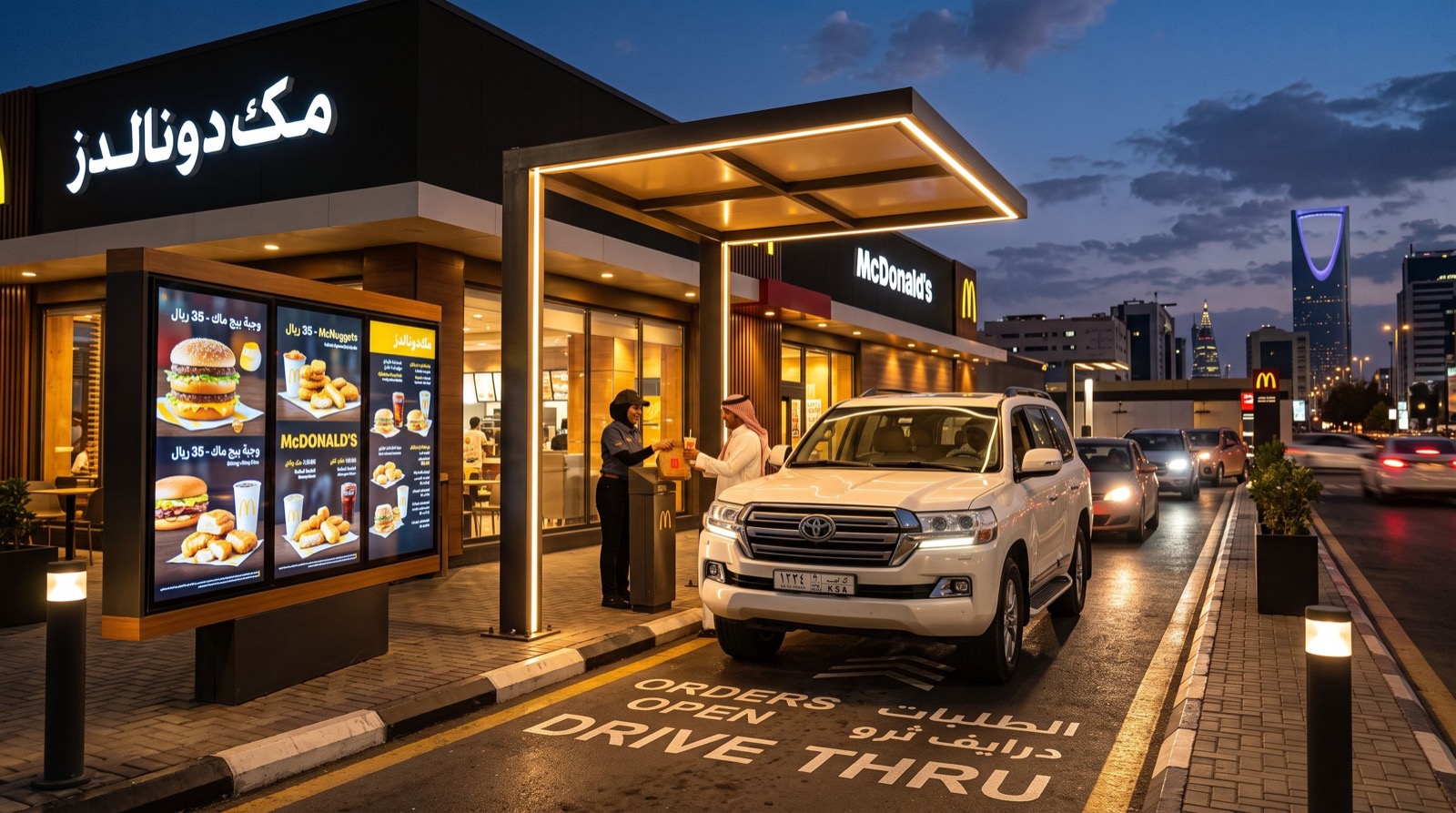
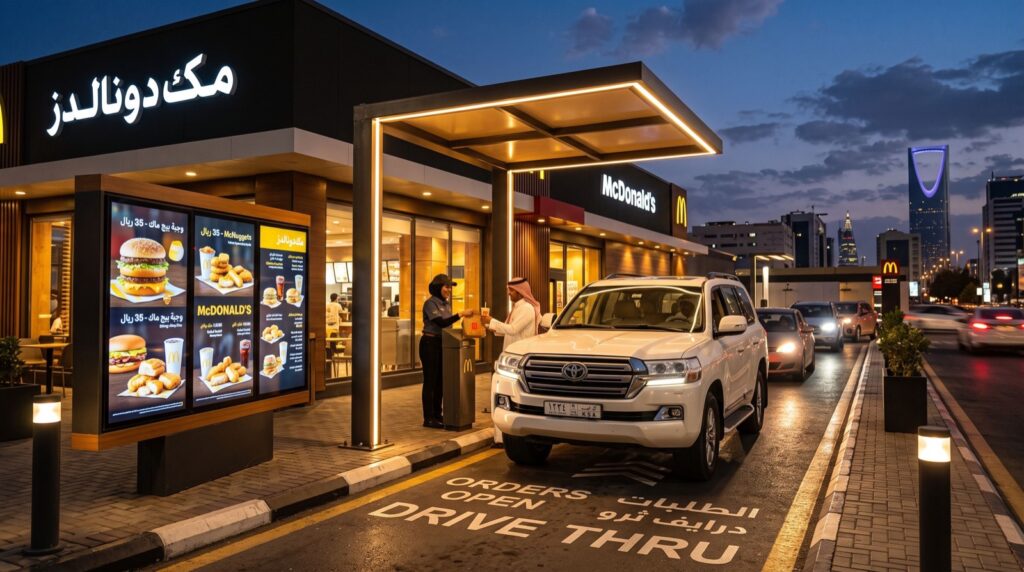
Businesses rolling out these lanes across the region rely on Drive-thru Systems in Saudi Arabia integrators who combine audio, displays, and network cabling into one dependable installation. That single-vendor approach avoids the finger-pointing that plagues mixed setups.
Where Drive-Thru Seconds Disappear
| Stage | Common Delay Cause | Fix |
|---|---|---|
| Order-taking | Poor audio, misheard items | Noise-filtered headset system |
| Menu browsing | Static, cluttered boards | Dynamic digital menu display |
| Confirmation | No visual check | Order-confirmation screen |
| Payment | Slow terminals | Contactless, pre-loaded totals |
| Hand-off | Kitchen out of sync | Real-time order display timing |
Deploying Scanning and Drive-Thru as One Network
Both technologies share a dependency: the network beneath them. Treat them as connected endpoints on well-planned infrastructure, not isolated gadgets.
- Run structured cabling to every scanner station and drive-thru node.
- Segment traffic so payment data stays secure and isolated.
- Prioritize voice and order data for low latency at the lane.
- Provide redundant connectivity so an outage never freezes sales.
- Centralize monitoring to spot failing devices before staff do.
A resilient network keeps scanners reading and lanes moving even during peak rush. That reliability is what separates a smooth operation from a stalled one.
Field Lessons Worth Applying
Deployments teach practical truths. A few stand out.
Position scanners for ergonomics. A presentation scanner mounted at the wrong height slows cashiers and causes strain. Test placement before finalizing.
Weatherproof the drive-thru. Outdoor speakers and displays face heat, dust, and moisture. Specify rated enclosures from the start.
Plan installs alongside other projects. If you are fitting out or relocating a site, coordinate hardware with your broader move. Engaging quality service providers keeps cabling, mounting, and logistics on one schedule.
Choosing the Right Scanner for Each Environment
Scanning needs vary sharply between a retail counter, a stockroom, and a loading dock. Matching the device to the setting prevents frustration later.
Retail checkout favors hands-free presentation scanners that read products and phone codes as items pass by. Speed and ergonomics dominate the decision.
Warehouse and inventory work calls for rugged handheld or wearable units with long range and durable housings. They must survive drops and read codes from a distance on high shelves.
Curbside and drive-thru operations increasingly scan loyalty and order codes at the vehicle, so cordless mobility and screen-reading capability matter most.
A short environment audit before purchase saves money. Buying rugged units for a gentle counter wastes budget, while deploying fragile scanners in a warehouse guarantees early failures and downtime.
Peak-Rush Resilience: Planning for the Busy Hour
Any system looks great when it is quiet. The real test arrives at the lunch rush or holiday surge. Design for that moment.
- Keep spare scanners charged and within arm’s reach of every lane.
- Stage backup connectivity so an internet dip never halts transactions.
- Pre-load common drive-thru orders to shave seconds at payment.
- Assign a floor lead to watch timing analytics live during peaks.
- Schedule maintenance windows well outside high-traffic hours.
Resilience is a design choice, not an accident. Operations that plan for the busy hour keep serving smoothly while competitors stall. That reliability protects revenue precisely when the most money is on the table, and it turns peak periods from a liability into a competitive edge.
Frequently Asked Questions
What is the difference between laser and imaging barcode scanners?
Laser scanners read only linear barcodes and need decent alignment. Imaging scanners capture 1D and 2D codes from any angle, including damaged and on-screen codes. Imaging units dominate 2026 deployments for their speed and flexibility.
Can a drive-thru system integrate with my existing POS?
Yes. Modern drive-thru platforms connect to leading POS and kitchen-display systems through standard interfaces. Integration syncs orders, timing, and payment so the lane and kitchen operate in step.
How much can drive-thru upgrades cut service time?
Sites that modernize audio, menu boards, and confirmation screens commonly trim total service time by fifteen to thirty seconds per car. Across a busy day that compounds into hundreds of extra served vehicles.
Do hands-free scanners need special mounting?
Presentation scanners come with stands or can mount into counters for automatic reading. Proper height and angle matter for ergonomics, so plan the fixture during counter design rather than afterward.
Conclusion
In 2026, speed of service is a competitive weapon, and the right barcode scanners and drive-thru systems are how you wield it. Choose imaging hardware with high first-pass reads, deploy intelligent lane technology, and build both on a resilient, well-cabled network. Master those fundamentals and every transaction gets faster, cleaner, and more profitable.